
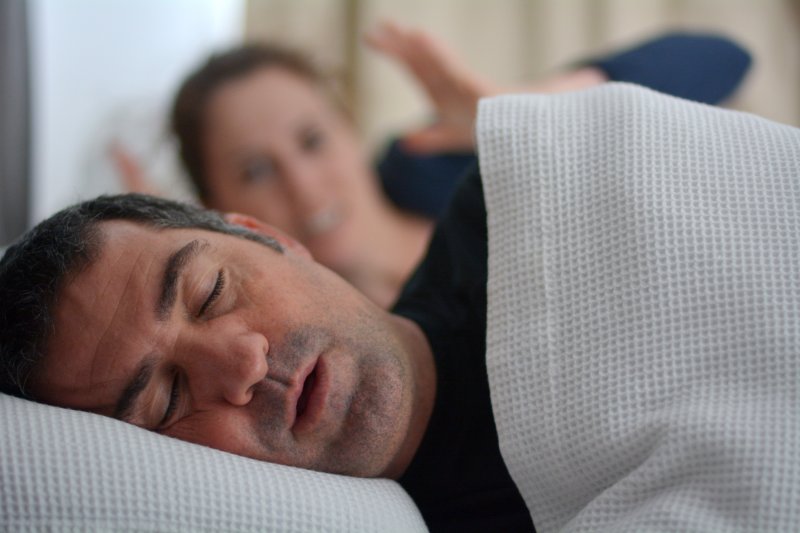
A lot of the time, people attribute sleep apnea to one’s lifestyle. The thought is that you’ll only get it if you overeat, smoke, drink, and so on. Still, more folks these days wonder: Is sleep apnea a genetic condition? Your Southlake dentist takes this question seriously, so he’s here to offer an answer. Just keep reading to learn about sleep apnea, whether it’s genetic, and when (if at all) to see a doctor about it.
Sleep Apnea: A Brief Definition
Before you consider the genetics question, you need to know what sleep apnea is. Why (or why not) genes play a role in it won’t make sense to you otherwise.
Sleep apnea is a condition that makes your breathing stop and start while you’re asleep. As such, it often occurs when something blocks your airway and keeps air from moving through your throat. This scenario forces you to wake up briefly to resume breathing, preventing restful sleep.
While it may seem like a minor issue, sleep apnea can greatly harm one’s health. Its frequent interruptions to sleep cycles usually lead to daytime sleepiness, irritability, and headaches. Left untreated, this apnea also puts stress on your heart that can have deadly consequences.
Sleep Apnea is (Partly) Genetic
Having reviewed the above, we can now share the truth: sleep apnea is partly genetic. It’s entirely possible to inherit a risk for it from one’s family background.
The latest scientific research backs this finding. Indeed, scholars find that 40% of differences in the number of times people stop breathing while asleep stem from genes. They speculate that this reality is due to how genetics affect body fat amount and distribution. Genes shape where (and how much) fat is located on your body, so they can impact whether your apnea risk is high or low.
Of course, genes don’t dictate your destiny. Scientists note that many causes of sleep apnea are lifestyle-related and that healthy living can reduce one’s risk.
See a Doctor When Symptoms Occur
While genes play a role in sleep apnea, you still have the power to prevent or manage it. All you’d need to do is monitor the risk factors and see a doctor when (or if) you show relevant symptoms. On that latter point, the signs to watch for include:
- Daytime fatigue or sleepiness
- Morning headaches
- Frequent snoring
- Persistent irritability
- Choking or gasping in your sleep
- Memory loss
- Difficulties with concentration
- Constant waking in the middle of the night
Sleep apnea is a (partly) genetic condition, but it’s not inevitable. Live a healthy lifestyle so you’re less likely to get it, and see a sleep dentist if you do.
About the Practice
Hinkle Family Dental is based in Southlake, TX. Led by Dr. Roth Hinkle, our practice always provides the comprehensive and top-tier dentistry you deserve. We thus offer preventive, cosmetic, and even restorative treatments, as well as sleep apnea therapy. Whatever problem your smile is having, rest assured that our team can handle it! For more details or to book a visit, please contact us on our website or by phone at (817)-481-4888.