
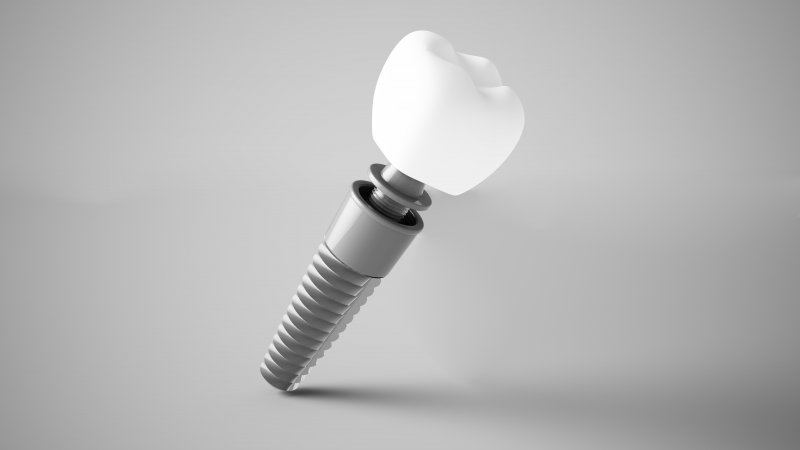
Dental implants are known for their longevity. Capable of lasting 30+ years, most patients attribute this lifespan to taking proper care of their new teeth. While this is important, another factor can determine how long you can expect to enjoy your prosthetics – their materials. Keep reading to discover the available options and how they can influence life expectancy.
What Kinds of Dental Implant Materials Are Commonly Used?
Titanium and zirconia are the two most common materials used to create the implant posts and abutments. Porcelain and acrylic are the primary options for crafting custom restorations. While each offers unique benefits, some provide greater strength and durability, allowing them to last longer.
Let’s take a look at how they match up against each other:
Titanium vs. Zirconia Implant Posts & Abutments
It’s important to know how these two materials perform in terms of stability, aesthetics, and compatibility.
Both are biocompatible, allow successful integration with bone tissue, and are corrosion-resistant. Because they fuse properly, titanium and zirconia offer superior durability and longevity.
Those who choose zirconia implant posts often do so because they are an ideal option for anyone who might have a metal sensitivity.
Regarding abutments, both materials are strong. Titanium can be used with various prosthetics, allowing the restoration to be properly attached to the implant post. Zirconia is more aesthetically pleasing and biocompatible, and it is highly resistant to daily wear and tear.
Porcelain vs. Acrylic Restorations
When looking at the restorations that make up your new teeth, you want a crown, bridge, or denture that looks and feels natural.
Porcelain restorations appear lifelike because they closely resemble natural enamel. They’re durable but can be damaged if excessive pressure is applied.
Acrylic restorations are often considered more affordable and lightweight, but they are often less durable than porcelain. As a result, they may chip or break more easily and require replacement more often.
Why High-Quality Materials Are Best
Based on the information provided, you cannot go wrong with titanium or zirconia dental implants. Although there are a few factors to keep in mind, overall, they hold up well over time. What matters most is ensuring the prosthetics you choose meet the highest quality standards. While some dentists use cheaper materials, you will not walk away with a long-lasting smile.
Never be afraid to ask your dentist about the quality of the dental implants they use. Learning more about their materials will help you decide how to proceed with achieving a newer, healthier smile.
About the Author
Dr. Roth Hinkle graduated from dental school in 2008 and has since completed countless hours of continuing education, many of which focused on implant placement and restoration. Providing patients with high-quality tooth replacement, he builds personalized treatment plans that ensure only the best materials are used for longer-lasting results. If you are thinking about dental implants, visit our website or call (817) 481-4888 to schedule an appointment.